




How to Choose the Right Pool Cue: Weight, Tip Diameter & Balance Explained
Picking up a house cue at the local pool hall is one thing. Choosing a pool cue that actually fits your stroke, your style, and your body is something else entirely. The difference shows up in every shot: cleaner contact, better cue ball control, and a more consistent game over time. If you are ready to stop guessing and start playing with equipment that works for you, this guide breaks down everything you need to know before buying your first or next cue.
We cover the four specifications that matter most: weight, tip diameter, shaft taper, and balance. We also address common beginner mistakes, explain how player height connects to cue choice, and give you specific product recommendations that bridge the gap between theory and your next purchase.
Why the Right Pool Cue Actually Matters
Most beginners underestimate how much the cue itself influences their development. A cue that is too heavy for your arm length encourages lifting the back of the stick during the stroke. A tip that is too large makes it harder to develop precise cue ball control. A shaft with high deflection means you are constantly compensating for physics instead of focusing on positioning.
The right pool cue does not make you an overnight champion, but it removes unnecessary variables from your game. When you are not fighting your equipment, you learn faster, you play more consistently, and the game becomes significantly more enjoyable. That is reason enough to take cue selection seriously from the start.
Pool Cue Weight: Finding Your Ideal Range (18 to 21 oz)
The weight of a playing cue typically falls between 18 and 21 ounces, with 19 ounces sitting at the most popular and versatile point in that range. Understanding what each end of the spectrum offers helps you make an informed decision rather than just grabbing whatever feels heavy enough to look serious.
Lighter Cues (17 to 19 oz)
Lighter cues generate faster cue ball action and give you more finesse on delicate shots. They are particularly well suited for players who rely on speed and positioning rather than raw power. There is also a practical physical consideration here: shorter players, generally those under 5 feet 8 inches, often benefit from a lighter cue because it reduces the tendency to lift the back of the cue during the stroke. When a cue feels heavy at arm’s length, the natural instinct is to compensate by raising the grip end, which throws off your bridge angle and disrupts your line of aim.
Beginners are usually best served starting in the 18 to 19 oz range. This gives you enough mass for a controlled stroke without fatiguing your arm or forcing bad habits early in your development.
Heavier Cues (19 to 21 oz)
Heavier cues feel more stable through the stroke and can help players who tend to decelerate through the ball. The added mass keeps the cue on line without as much effort, which some players find reassuring, especially when breaking or playing a power game. That said, heavier does not automatically mean better. If you are smaller in frame or play a finesse-based game, a 21 oz cue can work against you.
Weight Is Adjustable
One thing many beginners do not know: most quality cues have an adjustable weight bolt in the butt. This means you can fine-tune your cue’s weight within a small range (usually plus or minus half an ounce) without buying a new stick. It is a useful feature when you are still dialing in your preferences.
If possible, test house cues of different weights before committing to a specific number. What feels right after five minutes of shooting is often more reliable than any chart or rule of thumb.
Tip Diameter: Spin, Precision, and the Trade-Off Beginners Miss
Tip diameter is one of the most misunderstood specifications in pool cue selection, especially among players coming from house cues, which typically run 13mm or larger. Here is what you actually need to know.
Standard Tip Diameter (12.75mm to 13mm)
This is the most forgiving range for beginners and intermediate players. A larger contact surface means miscues are less likely when you are applying side spin or trying to hit low on the cue ball. If you are still developing your stroke and your bridge hand is not perfectly consistent yet, a 12.75mm to 13mm tip gives you a larger margin for error.
Modern Performance Tip Diameter (11.7mm to 12.5mm)
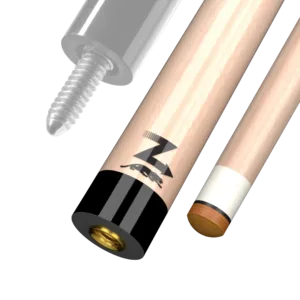
Smaller tips are the modern sweet spot for experienced players who want maximum control and the ability to apply precise amounts of English. A 12.4mm to 12.5mm tip is traditional and still widely used, while tips in the 11.7mm to 11.9mm range represent the performance end of the spectrum favored by players who prioritize spin and cue ball precision.
Here is the practical trade-off that most guides skip: a smaller tip requires a more consistent and accurate stroke. If your tip contact point shifts even slightly on off-center shots, a smaller tip amplifies that error. This is not a reason to avoid smaller tips permanently, but it is a reason to build your fundamentals first before chasing a 12mm shaft.
How Tip Size Affects Spin
Tip diameter affects how much of the cue ball surface you can realistically reach on off-center hits. A smaller tip lets you get closer to the edge of the cue ball, which translates to more extreme spin potential when you need it. However, that precision comes at the cost of the generous contact surface that helps beginners stay consistent. As your stroke matures, moving toward a slightly smaller tip is a natural and worthwhile progression.
Shaft Taper: Standard Taper vs. Pro Taper Explained
The taper of a cue shaft refers to how it widens from the tip toward the joint. This affects feel, stiffness, and how the cue behaves through your bridge. There are two main taper styles you will encounter.
Standard Taper
A standard taper gradually widens from the tip all the way back to the joint. This means the shaft is noticeably thicker even just 6 to 8 inches from the tip. The result is a softer, more flexible feel through the shot, which many players describe as forgiving. Standard taper shafts are common in entry-level and mid-range cues and are generally what you find on house cues.
Pro Taper (Consistent Taper)
A pro taper maintains a nearly constant diameter for the first 12 to 14 inches from the tip, then begins widening toward the joint. This creates a stiffer, more consistent feel through the stroke and is preferred by most serious and competitive players. Because the shaft does not widen inside your bridge, your grip and bridge position feel the same shot after shot, which improves consistency and makes your stroke easier to repeat.
Most performance shafts, including the Predator 314 and the Mezz Pro-152, use a pro taper profile. If you are upgrading from a house cue for the first time, the change to a pro taper can feel slightly stiffer, but most players adapt quickly and appreciate the improved feedback.
Low Deflection Shafts: What They Are and When You Need One
When you hit the cue ball off-center to apply English, the shaft bends slightly on contact and the cue ball deflects slightly away from your aim line. This is called cue ball deflection, or squirt, and it is a physics reality with every cue. The question is how much deflection your shaft produces.
Low deflection shafts are engineered to minimize squirt, which means your aim line stays closer to accurate when playing spin shots. This is a significant advantage for players who rely on English regularly. The trade-off is that low deflection shafts often require a short adjustment period if you are coming from a standard shaft, because the reduced deflection can feel unfamiliar at first.
Top Low Deflection Shaft Options
- Predator 314 Low Deflection Shaft: One of the most trusted names in the segment. The 314 uses a hollow tip construction and a refined wood taper to dramatically reduce deflection while maintaining a natural wood feel. It is a strong choice for intermediate players making their first upgrade into performance shafts.
- Predator REVO Carbon Fiber Shaft: The premium option from Predator. Carbon fiber construction delivers extreme consistency, virtually no warp, and very low deflection. If you want the most technologically advanced shaft on the market with minimal maintenance requirements, the REVO is hard to beat. You can read more in our Predator Cues Buying Guide.
- Mezz Pro-152 Low Deflection Shaft: A refined, warm-feeling shaft built with Mezz’s proprietary technology. The Pro-152 suits players who want low deflection performance with a softer, more traditional feel through the shot.
- Mezz W-150 Low Deflection Shaft: Another excellent option from Mezz, well regarded for its balance of feedback and accuracy. The W-150 is popular among players who appreciate a more responsive, refined playing experience. Learn more about Mezz’s engineering philosophy in our Mezz Exceed Cues Explained guide.
- POISON Ace Low Deflection Pool Cue: A strong entry point for players who want low deflection performance without the premium price tag of flagship shafts. POISON cues offer excellent value for intermediate players upgrading from basic equipment.
- POISON Black Widow Pool Cue: A step up within the POISON range, featuring enhanced aesthetics and performance. The Black Widow is a solid choice for players who want a complete cue with strong low deflection characteristics built in from the factory.
Balance and Length: Matching Your Cue to Your Body
Balance refers to where the cue’s center of gravity sits relative to the full length of the stick. A well-balanced cue feels natural in your hand during the stroke and does not force you to grip harder or adjust your elbow position to compensate.
Most standard playing cues are 57 to 58 inches long, which suits players of average height comfortably. If you are significantly taller than 6 feet 2 inches, a 61-inch cue may suit your natural stance better. If you are shorter or play in tight spaces, a shorter cue reduces the risk of the butt catching walls or railings on your backswing.
Balance point preference is personal. Some players prefer a cue that balances closer to the front, giving a slightly tip-heavy feel that some describe as guiding the stroke. Others prefer the balance point sitting more toward the middle or rear, which creates a lighter feel at the tip and suits players with a smooth, pendulum-style stroke. The best way to identify your preference is to handle several cues before committing.
If you invest in a quality playing cue, protecting it during transport is just as important as choosing the right specs. Our Premium Pool Cue Cases Guide covers everything you need to know about keeping your cue safe between sessions.
Brand Feel: Predator, Mezz, and Exceed Compared
Beyond specs, different cue brands have distinct personalities that experienced players consistently notice. Understanding these tendencies helps you narrow down your shortlist before you buy.
- Predator cues tend toward a stiffer, brighter hit. You get clear, immediate feedback through the shot, which many competitive players love for its precision. The REVO shaft in particular is extremely consistent and virtually immune to humidity changes.
- Mezz cues lean toward a warmer, more refined feel. The hit is smooth and cushioned without feeling soft or dead. Mezz cues are built to extremely tight tolerances and are popular with players who prioritize feel and craftsmanship in equal measure.
- Exceed cues reward touch and control. They suit players with a developed stroke who want a cue that responds to subtle variations in speed and spin rather than amplifying every hit uniformly.
None of these brands produces a bad cue. The differences are genuine but nuanced, and the best way to understand them is to shoot with each. Pro Cue Shop stocks authentic cues and shafts across all three brands, and our team is available by WhatsApp or live chat to help you compare options based on your specific game.
Should You Buy a Separate Break Cue?
If you break hard, the answer is yes. The break shot places significant stress on the shaft, and repeatedly driving your playing shaft into a racked set of balls accelerates tip wear and can affect the shaft’s performance over time. A dedicated break cue like the Predator BK Rush protects your playing shaft and lets you optimize each cue for its specific purpose: one for finesse and control, one for raw power.
For beginners who are still developing their break, a separate break cue is not urgent. But as your game grows and you invest more in your playing shaft, the dedicated break cue becomes an easy decision.
Final Checklist Before You Buy
Use this checklist to confirm you have considered the key variables before purchasing your next pool cue:
- Weight: Start at 18 to 19 oz if you are a beginner or a shorter player. Move up toward 20 to 21 oz if you prefer stability and a power-oriented game.
- Tip diameter: Choose 12.75mm to 13mm for a forgiving, beginner-friendly contact surface. Progress toward 12mm to 12.5mm as your stroke becomes consistent and you want more spin precision.
- Shaft taper: Standard taper for flexibility and forgiveness. Pro taper for consistency and a more reliable bridge feel shot after shot.
- Shaft material: Maple for a classic, natural feel at a lower price point. Carbon fiber for maximum consistency, low deflection, and zero maintenance concerns.
- Balance and length: 57 to 58 inches suits most players. Adjust for height and playing environment. Handle the cue before buying if at all possible.
- Break cue: Consider a separate break cue if you break hard and want to protect your playing shaft investment.
- Budget: Entry-level performance cues start around the mid-range price point. Do not sacrifice shaft quality to save on the butt; you can always upgrade the butt later, but the shaft drives your performance.
Frequently Asked Questions
What is the standard pool cue weight for beginners?
Most beginners do well starting with a 19 oz cue. This weight sits comfortably in the middle of the standard 18 to 21 oz range and gives you a stable, controllable stroke without feeling too heavy or too light. Shorter players may prefer 18 oz to reduce the tendency to lift the back of the cue during the stroke.
What is the standard pool cue tip diameter?
The most common and beginner-friendly tip diameter is 12.75mm to 13mm. This size offers a forgiving contact surface that reduces miscue risk on off-center shots. More experienced players often move toward 12mm to 12.5mm for greater spin precision and control.
What is the difference between a pro taper and a standard taper pool cue shaft?
A standard taper gradually widens from the tip all the way to the joint, creating a softer, more flexible feel. A pro taper holds a consistent diameter for the first 12 to 14 inches before widening, which produces a stiffer, more repeatable feel through the bridge. Most serious players prefer a pro taper for its consistency.
Do I really need a low deflection shaft?
Not immediately, but it becomes increasingly valuable as you develop your game and rely more on English. Low deflection shafts reduce cue ball squirt, which means your aim line stays more accurate when hitting off-center. If spin shots are a regular part of your game, a low deflection shaft like the Predator 314 or Mezz Pro-152 is a worthwhile investment.
How do I know if a pool cue is well balanced?
Hold the cue loosely at your grip point and let it rest naturally. A well-balanced cue should not feel tip-heavy or butt-heavy in a way that forces you to compensate. Balance preference varies between players, so the best test is simply how comfortable and natural the cue feels during your actual stroke, not just while holding it statically.
Can I try different cue weights before buying?
Yes, and you should. Testing house cues of different weights at your local pool hall is the most practical way to identify your preference. If you cannot test in person, our team at Pro Cue Shop is available by WhatsApp or live chat to help you choose based on your playing style, body type, and experience level.
Ready to find the cue that fits your game? Pro Cue Shop stocks authentic Predator, Mezz, and Exceed cues and shafts across a full range of weights, tip diameters, and shaft types, with worldwide delivery and expert guidance every step of the way. Tell us your style, your budget, and your experience level, and we will point you in the right direction.


We use cookies to improve your experience. By continuing, you agree to our cookie policy.
I Accept
We usually reply instantly
Your Cart
Add $999.00 more to get free shipping!

Predator BK Rush USA Break Cue No Wrap
Price range: $949.00 through $974.00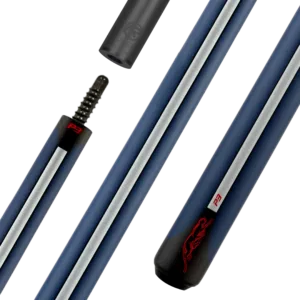
Predator P3 Painted Blue Pool Cue No Wrap Radial
Price range: $1,289.00 through $1,533.00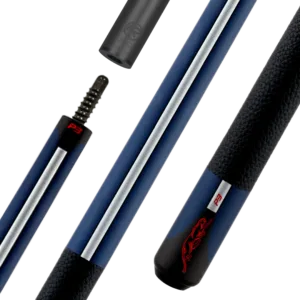
Predator P3 Painted Blue Pool Cue Leather Luxe Radial
Price range: $1,369.00 through $1,613.00
Predator P3 Fourth of July No Wrap Pool Cue
Price range: $1,289.00 through $1,533.00
- Email:support@procueshop.com
- Phone:+1 701 214 0492
All Categories
Search
Predator BK Rush USA Break Cue No Wrap
Price range: $949.00 through $974.00Predator P3 Painted Blue Pool Cue No Wrap Radial
Price range: $1,289.00 through $1,533.00Predator P3 Painted Blue Pool Cue Leather Luxe Radial
Price range: $1,369.00 through $1,613.00
Total 1 Comment
[…] investment that protects a much larger one. If you are still building your setup, read our guide on how to choose the right pool cue weight, tip, and balance before deciding on case […]